Fotona 4D Laser Facial (TimeWalker) in Encino, CA for Long-Term Skin Revitalization
When patients ask for skin rejuvenation that looks real, not overdone, the conversation often turns away from quick fixes and toward collagen. Fine lines, early laxity, uneven texture, dullness, and that crepey quality that seems to appear almost overnight all share a common thread: the skin is no longer rebuilding itself the way it once did. A treatment can make the surface look brighter for a week, but long-term revitalization depends on getting the skin to behave younger, not just appear temporarily smoother.
That is where the Fotona 4D Laser Facial (TimeWalker) has earned serious attention. In Encino, CA, where patients tend to be well informed and understandably selective, interest in treatments that improve skin gradually and naturally has grown for a reason. Many people want visible change without surgery, and they want that change to fit into a full life. They still need to work, socialize, exercise, and move through the week without disappearing for a prolonged recovery.
Fotona 4D sits in a useful middle ground. It is more substantial than a light lunchtime facial, yet far less disruptive than surgery or aggressive ablative resurfacing. Its appeal is not just the technology itself, but the way it treats the skin in layers. Instead of relying on one depth or one mechanism, it combines several treatment modes to target tone, texture, laxity, and support structures in a coordinated way. That layered approach is often what makes the outcome look balanced rather than obvious.
Why long-term revitalization requires a different mindset
A lot of disappointment in aesthetics comes from expecting one treatment to fix what developed over years. Skin aging is not a single event. It is cumulative. Sun exposure, collagen loss, facial movement, inflammation, dehydration, gravity, and plain genetics all leave their mark. In Encino, daily UV exposure is a major factor. Even people who do not consider themselves sun worshippers often accumulate years of incidental exposure from driving, walking, errands, and outdoor exercise.
When skin starts to lose firmness, most patients notice it in ordinary moments, not under magnifying lights. Makeup settles around the mouth. The cheeks do not reflect light the same way. The jawline softens a bit. The area under the eyes starts to look tired even on good days. These are subtle changes, but they matter. They shift how the whole face reads.
Treatments designed for long-term revitalization usually work best when they stimulate remodeling rather than simply creating short-lived swelling or exfoliation. Collagen remodeling takes time. Elastin support takes time. Better texture and improved skin quality tend to appear in stages. Patients who understand that process are usually the happiest with their results, because they are not chasing overnight transformation. They are building a stronger baseline for their skin.
What the Fotona 4D Laser Facial (TimeWalker) actually is
The Fotona 4D Laser Facial, often associated with the TimeWalker platform, is a multi-step laser treatment that addresses both the inside and outside of the face. One of its distinguishing features is that part of the treatment can be performed intraorally, meaning from inside the mouth, to target tissue in the perioral and midface region without incisions. That sounds more dramatic than it feels in practice, but it is one reason the treatment stands apart from basic surface-only rejuvenation options.
The treatment generally combines modes that heat deeper tissues, stimulate collagen contraction, improve circulation, and refine the skin surface. The exact settings, intensity, and sequence can vary by provider and patient needs. A person in their late thirties with early laxity and enlarged pores does not need the same plan as someone in their fifties dealing with more established lines around the mouth and a rougher texture.
The phrase “4D” refers to the layered treatment strategy rather than a gimmick. In practical terms, that means the provider is not only polishing the top layer of skin. They are working at different depths to encourage lifting, tightening, and resurfacing in a way that can complement the natural architecture of the face.
For patients searching specifically for Fotona 4D Laser Facial (TimeWalker) Encino, CA, the main advantage is that the treatment can be tailored rather than delivered as a one-size-fits-all package. That customization matters, especially in a population with varied skin concerns, different tolerance for downtime, and a wide range of prior aesthetic treatments.
What makes it different from a standard facial or a peel
The word “facial” can be misleading. A standard facial typically focuses on cleansing, exfoliation, hydration, and circulation. Those treatments can be relaxing and beneficial, but they are not designed to remodel deeper tissue. Chemical peels, depending on strength, can improve pigment irregularity and texture very effectively, but they work through a different mechanism and may not offer the same tissue-tightening effect.
Fotona 4D is closer to a collagen-stimulating rejuvenation procedure than a spa treatment. That distinction matters when setting expectations. Patients often notice a fresher look soon after treatment because of mild edema and increased circulation, but the more meaningful changes usually emerge over several weeks to months. Skin often starts looking tighter, smoother, and more refined in a way that friends may describe as rested or polished rather than treated.
That natural read is one reason experienced patients often favor this category of treatment. They do not want to look different in a way that raises questions. They want to look like they are aging unusually well.
The kinds of concerns it tends to address best
In real practice, Fotona 4D tends to be most satisfying for people who have mild to moderate signs of aging and who still have decent underlying skin quality. It can be useful for those early transition years when creams are not enough, but surgery feels premature. It also appeals to patients who are trying to maintain the benefits of prior treatments and delay more invasive intervention.
Common treatment goals include softening fine lines, especially around the mouth; improving the look of enlarged pores; brightening dull skin; refining texture; and addressing mild skin laxity in the cheeks, jawline, or lower face. It may also be used as part of a broader plan for acne scarring or uneven tone, though that requires honest assessment. Not every scar pattern responds equally well to every laser protocol.
A point worth stressing is that no non-surgical treatment replaces a surgical lift when there is significant tissue descent. Providers who do this work well tend to be straightforward about that. The best candidates are not necessarily the oldest patients. They are the ones whose skin still has enough regenerative capacity to respond well and whose goals match what the treatment can realistically deliver.
What a typical appointment in Encino often looks like
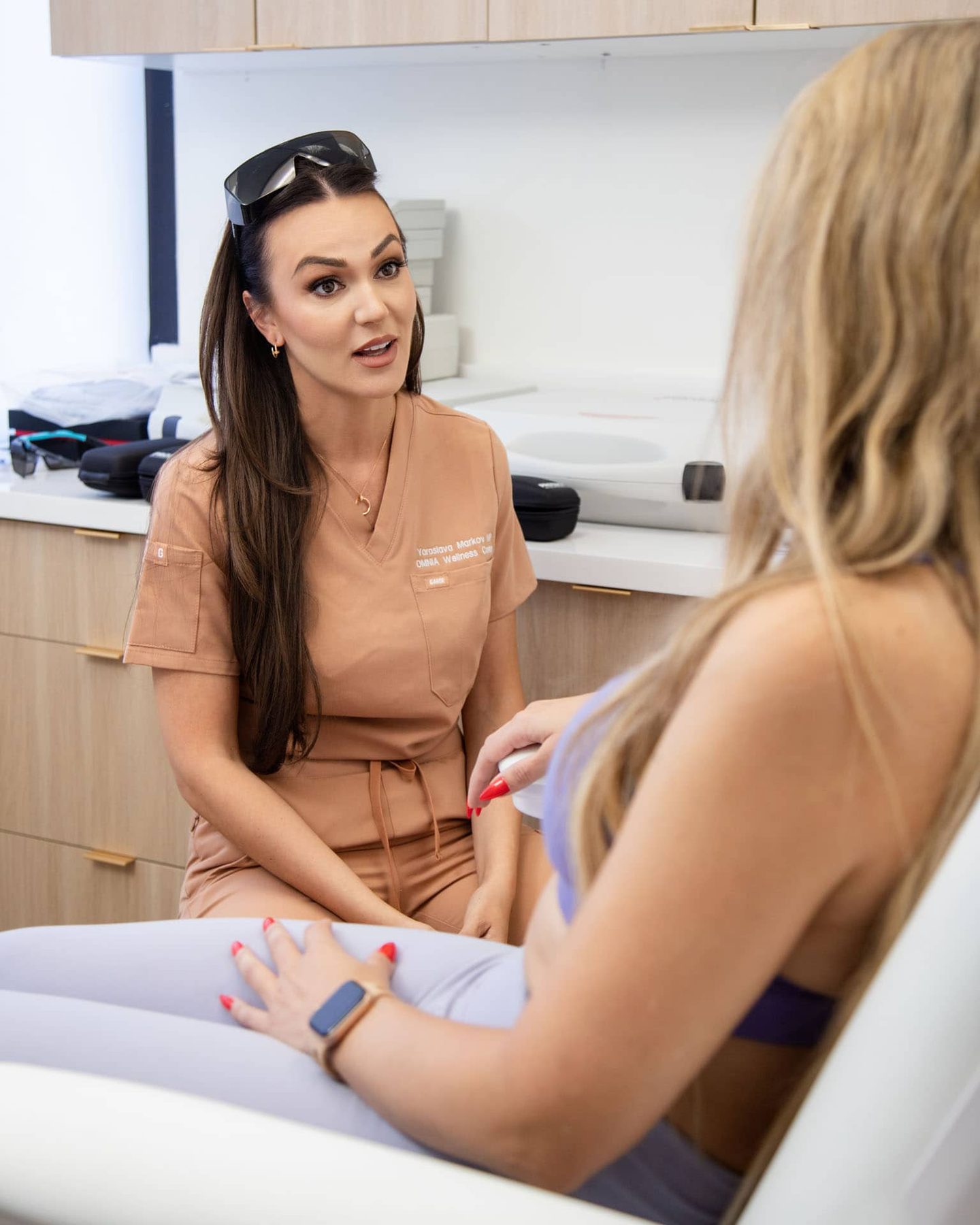
A thoughtful consultation should come before the laser does. In an area like Encino, many patients arrive having tried several treatments already, which means the provider needs to understand not just the skin in front of them, but the history behind it. Prior peels, radiofrequency, fillers, neuromodulators, retinoids, isotretinoin history, melasma tendencies, and sun exposure habits all matter.
On treatment day, the skin is cleansed thoroughly. Some providers use topical numbing for comfort, particularly if more aggressive settings are planned. Eye protection is used where appropriate, and the treatment proceeds in stages. The intraoral portion, when included, is usually quicker than patients expect. The external passes then address surface and deeper dermal layers depending on the chosen protocol.
Most people describe the sensation as heat with intermittent prickling or snapping, not unbearable pain. Comfort varies by settings and by individual sensitivity. Around the mouth can be the most noticeable area because the skin there is thinner and more expressive. Treatments that aim for stronger resurfacing naturally feel more intense than lighter maintenance sessions.
The appointment length can vary, but it is generally reasonable enough for busy professionals to fit into a weekday schedule. That practical advantage should not be underestimated. Many aesthetic patients are not avoiding treatment because they fear discomfort. They are avoiding treatment because they cannot afford chaos in their calendar.
Downtime, social recovery, and what patients often notice afterward
Downtime is one of the first questions patients ask, and rightly so. The honest answer is that it depends on how aggressively the treatment is performed. A lighter session may leave the skin pink and a bit warm for a day or two, while a stronger resurfacing component can lead to more visible redness, dryness, and roughness for several days. Some people feel comfortable returning to normal activities quickly, especially with tinted sunscreen or light makeup once the skin barrier allows. Others prefer a little social quiet time.
What is often underestimated is the difference between medical downtime and social downtime. A patient may technically be safe to resume routine activities quickly, but still feel visibly flushed enough to postpone a dinner or a photo-heavy event. That is not a complication, just planning reality.
The skin may feel dry, tight, or rough as it renews. Sun avoidance matters afterward, and so does restraint. People who rub, scrub, over-exfoliate, or pile on active products too soon can sabotage their recovery. A bland, supportive routine is often best immediately after treatment. This is not the week to experiment with a new acid toner because it looked promising online.
Results rarely happen all at once, and that is a good thing
One of the most reassuring aspects of the Fotona 4D Laser Facial (TimeWalker) is the way results unfold. In a culture that often overvalues instant change, gradual improvement can seem less exciting on paper, but it tends to look better in life. Skin that improves over several weeks often reads as healthier, not manipulated.
Some patients see an early glow and a subtle tightness within days. The more durable changes tend to develop as collagen remodeling progresses. Texture may refine first, then pores appear less obvious, then the lower face and perioral area look a little firmer. The progression is rarely dramatic in a single leap. It is more like the face starts reflecting light differently and holding itself better.
That pattern also makes maintenance easier to understand. Rather than waiting until the skin looks depleted again, many patients do better with periodic reinforcement. It is similar to fitness. Starting from scratch every time is harder than preserving momentum.
Who tends to be a strong candidate
The strongest candidates usually share three traits. They want natural-looking improvement, they understand that collagen work takes time, and they are willing to protect their results with consistent sunscreen and sensible skincare. Patients with early jowling, mouth lines, rough texture, or dullness often do quite well.
Skin type matters too. Laser selection and settings should always take pigment risk into account. Patients with darker skin tones can absolutely benefit from laser rejuvenation, but the provider needs experience, caution, and a protocol chosen with safety in mind. Anyone prone to post-inflammatory hyperpigmentation should discuss that history openly during consultation.
There are also moments when waiting is wiser than proceeding. Active skin infection, significant irritation, recent tanning, or an impaired skin barrier are good reasons to postpone. The best laser plans are not rushed. When providers are selective, outcomes usually improve.
Where it fits among other aesthetic treatments
Fotona 4D is not the answer to every aesthetic concern, but it can occupy a very useful place in a broader treatment plan. It works particularly well for patients who need skin quality improvement more than volume replacement. A face can have plenty of filler and still look tired if the skin itself lacks tone and refinement. Conversely, good skin quality often makes other treatments look better and more restrained.
There is also a common misconception that devices and injectables are interchangeable. They are not. Neurotoxins relax specific muscles. Fillers restore or mimic volume. Biostimulators encourage collagen formation in a different way. Lasers improve tissue quality, texture, tone, and to some degree firmness. Many of the best results come from knowing which tool solves which problem, and in what order.
A patient with etched lip lines, rough texture, and mild lower-face laxity may get more Fotona 4D Laser Facial (TimeWalker) Encino, CA satisfaction from a laser-based collagen treatment than from adding volume alone. Another patient with deep folds caused mostly by volume loss may need a different strategy. The point is not that one category is superior. It is that diagnosis drives outcomes.
A practical approach to preparation and aftercare
The most successful recoveries are usually the least dramatic because the patient prepared properly and did not try to outsmart the healing process afterward.
- Arrive with untanned skin and disclose all active skincare, especially retinoids, acids, and any history of cold sores.
- Clear your schedule enough that a few days of redness or texture change will not create unnecessary stress.
- Use gentle cleansing, bland moisturizer, and broad-spectrum sun protection after treatment unless your provider advises otherwise.
- Avoid picking, scrubbing, or restarting strong actives too early, even if the skin feels rough.
- Plan results in months, not days, especially if your goal is long-term skin revitalization.
That sort of discipline sounds simple, but it often separates the excellent result from the merely decent one.
Why location and provider judgment matter in Encino
Encino is not short on aesthetic options, which is both an advantage and a challenge. Patients can access sophisticated treatments, but they also have to sort through a lot of marketing language. A good consultation should feel specific, not scripted. The provider should examine movement, skin thickness, pigment pattern, degree of laxity, and lifestyle factors before recommending a plan.
Experience matters with laser settings, but judgment matters just as much. Overtreating is not a badge of expertise. Neither is promising a surgical result from a non-surgical treatment. In my experience, patients trust providers more when they hear a clear explanation of trade-offs. For example, a gentler approach may mean less downtime but slower gains. A stronger resurfacing component may improve texture more noticeably but require stricter recovery and social planning. Neither option is universally better. The right choice depends on the face, the skin, the calendar, and the patient’s tolerance for recovery.
Patients looking for Fotona 4D Laser Facial (TimeWalker) Encino, CA should listen closely to how a practice discusses customization, skin typing, expected recovery, and maintenance. Those details reveal more than before-and-after photos ever can.
How often treatment is usually done
There is no single schedule that fits everyone. Some patients do a series to build momentum, then space maintenance treatments over time. Others use it as a strategic refresh once or twice a year depending on age, sun exposure, skincare consistency, and baseline skin quality.
A younger patient in prevention mode may not need the same frequency as someone trying to reverse more established textural damage and laxity. This is one area where honest follow-up is useful. Skin tells the truth. If texture is improving, tone is brighter, and firmness is holding, maintenance can be conservative. If the skin remains chronically sun stressed or the patient has high movement around the mouth with deeper etched lines, more regular reinforcement may make sense.
The understated benefit patients often mention
People usually come in asking about lines, pores, or laxity. What they often mention afterward is something less technical: their skin looks alive again. It catches light more evenly. Makeup sits better. They feel less compelled to blur everything with foundation. Their face looks cleaner, rested, and more current, even if nobody can name why.
That is the real value of a treatment like this when it is done well. It does not simply chase flaws. It restores coherence to the skin. The surface, the structure, and the expression start working together again.
For the right candidate, the Fotona 4D Laser Facial (TimeWalker) can be an excellent choice for long-term skin revitalization. Not because it promises miracles, but because it respects how skin actually ages and how meaningful improvement actually happens, layer by layer, over time.
OMNIA Wellness Center
16430 Ventura Blvd Ste 207, Encino, CA 91436
Phone: +1 818-386-8511
FAQ About Fotona 4D Laser Facial (TimeWalker) Encino, CA
What is a Fotona laser good for?
Fotona lasers support several different aesthetic protocols. The Fotona 4D facial uses two wavelengths and four treatment modes to address concerns such as fine lines, skin texture, and mild laxity. OMNIA Wellness Center offers the TimeWalker facial with an individual consultation. Suitability and likely improvement depend on the person's skin and goals; results are not guaranteed, and this treatment does not reproduce a surgical facelift.
How much does a Fotona laser treatment cost?
The cost depends on the treatment protocol, areas treated, number of sessions, and provider's assessment. Ask OMNIA Wellness Center for a current written quote that explains what is included, whether follow-up is included, and any proposed package terms. An individualized estimate is more useful than assuming that one advertised price applies to every facial treatment.
How much downtime is there after a Fotona laser procedure?
Recovery varies with the specific protocol and intensity. Fotona describes its 4D facial as having little to no downtime, but temporary redness or sensitivity can occur, and a stronger surface treatment can require more recovery. Ask the treating clinician what to expect from the planned settings, how to care for the skin afterward, and when to contact the clinic with concerns.
Ends · ARCHERZKWI991